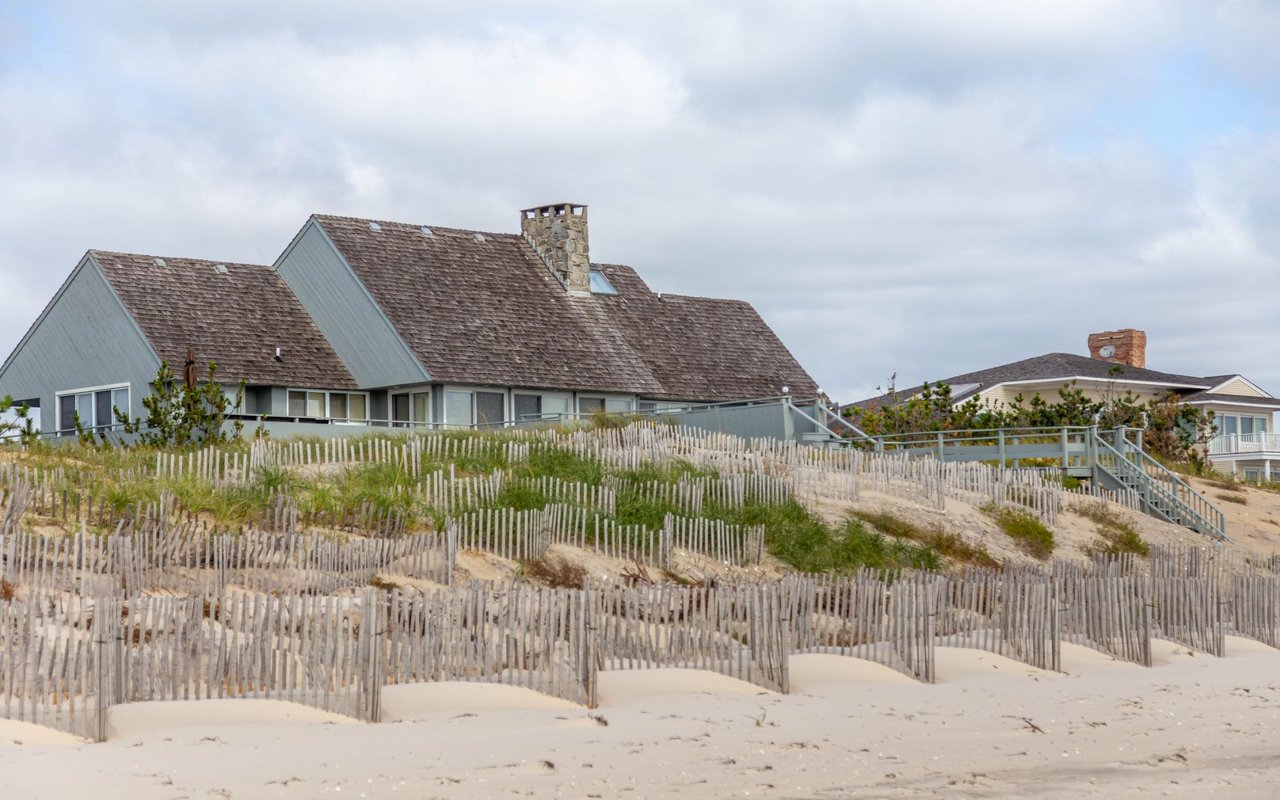
Two oceanfront condos go up for sale in Atlantic Beach within the same month. Similar square footage, similar view, similar asking price. One carries HOA dues of $340 a month. The other runs $580. Most buyers walk toward the cheaper number without a second thought.
That instinct is exactly backward right now, and the reason has almost nothing to do with amenities or unit finishes. It has to do with what North Carolina law does not require an association to do, what insurance has been costing coastal buildings for the past two years, and a federal financing rule that starts biting in a few months.
Why North Carolina Never Answers the Question
A reserve study is the document that tells a condo board what the roof, the elevator, the stairwells, and the siding will cost to replace and when. It is the single best predictor of whether a building is heading toward a special assessment. In most states with serious coastal exposure, that document is either mandated by statute or close to it. North Carolina isn't one of them.
Chapter 47C of the North Carolina General Statutes requires condo associations to budget "adequate reserves for maintenance, repair, and replacement of common elements," but the law never defines adequate. There's no minimum percentage, no mandated professional study, no statewide funding floor. A board can satisfy the statute with an internally prepared budget, or it can commission a full reserve study every three to five years, which is the widely recommended practice. Both are legal.
The resale disclosure a seller has to hand a buyer before closing, required under N.C. Gen. Stat. § 47C-4-109, tells you the current monthly assessment and any other fees. It does not tell you whether that number reflects a fully funded reserve or a board that has been holding dues flat while deferring the roof for another year. Two buildings can show identical monthly fees on paper and be in completely different financial condition, and nothing in state law forces either one to say so.
That gap is why the fee alone can't tell you what you think it tells you. It is a number a board chose to charge, not a number that reflects what the building actually needs.
What's Actually Inflating the Number You're Comparing
Coastal HOA fees have been moving for a specific, traceable reason over the past two years, and it isn't board mismanagement. North Carolina's Insurance Commissioner negotiated the statewide homeowners rate request down to two annual 7.5 percent increases, but that settlement hit coastal counties harder than the state average. Beach territories in Carteret, along with Brunswick, New Hanover, Onslow, and Pender counties, absorbed roughly a 16 percent increase in 2025 and another 15.9 percent in 2026.
For a single-family homeowner that shows up on one insurance bill. For a condo association, it shows up on the master policy, and the master policy is the largest line item most HOA budgets carry. A board facing a mid-teens percentage jump on wind, hail, and property coverage has exactly two options: raise dues to cover it, or pull the difference out of reserves meant for the next roof or balcony replacement. Boards that choose the second option keep the monthly fee looking attractive on a listing sheet for another year or two, right up until the reserve account can't absorb the next repair and a special assessment lands instead.
That is the mechanism behind the $340 unit. It isn't necessarily a better-run building. It may just be a board that hasn't passed the insurance increase through yet.
The Financing Rule That Turns This Into a Resale Problem
Here is the part that changes the calculation for anyone buying with a conventional loan, and it has nothing to do with today's closing.
Fannie Mae and Freddie Mac have retired the Limited Review and Streamlined Review paths that used to let smaller or lower-risk condo projects skip a full financial review. Going forward, most established buildings have to qualify through a Full Review, which digs into the budget, the reserve allocation, the insurance program, and the assessment history. For loan applications dated on or after January 4, 2027, the minimum replacement-reserve allocation required to pass that review rises from 10 percent to 15 percent of the association's annual budgeted assessment income.
A building that has kept its dues artificially low by underfunding reserves is exactly the kind of project that risks falling short of that 15 percent threshold. If it does, conventional financing becomes harder to get for the next buyer, not because anything changed about the unit itself, but because the association's own numbers don't clear the new bar. That has a direct effect on resale value and how long a unit sits on the market, even if the current owner never faces a special assessment personally.
In other words, the reserve gap you can't see today becomes a financing gap someone else runs into in 2027, and it starts affecting how marketable a unit is well before that date arrives.
What Proactive Funding Actually Looks Like
Southwinds, the oceanfront complex on the west end of Atlantic Beach, offers a useful contrast. The building recently completed a full capital renovation cycle: new roofs, new balconies, new landings, new stairs, and new walkways, all finished before the next storm season rather than after a failure forced the issue. That kind of work doesn't happen on a spreadsheet treasurer's budget. It happens when a board has been setting aside real money against a real study for years.
The point isn't that one building is better than another. It's that the difference between a board that funds ahead of schedule and one that funds after a failure is visible in the physical building, and it shows up years before it shows up in the monthly fee. A buyer who tours two similar units and only compares the dues number is comparing the wrong thing.
What to Pull Before You Write the Offer
The documents that actually answer the question a listing sheet can't:
- The last three years of the association's budget and financial statements, so you can see whether dues have kept pace with insurance renewals or lagged behind them
- The most recent reserve study, or written confirmation that none exists
- A full history of special assessments, including amounts and what they funded
- The master insurance policy's declarations page, with particular attention to the wind and hail deductible
- The resale certificate required under § 47C-4-109, which discloses the current assessment and any other fees owed
None of this is exotic. It's the same information a lender's Full Review will eventually ask for anyway. Getting it during due diligence, rather than finding out after closing, is the difference between choosing a building and inheriting one.
A Few Questions Worth Asking
Does North Carolina require a reserve study before I can buy a condo? No. The law requires the association to budget "adequate" reserves without defining the term, and there's no statutory requirement to commission a professional study at all. Getting one, or confirming one doesn't exist, is on the buyer.
If the HOA fee is low, does that mean the building doesn't need much maintenance? Not necessarily. A low fee on an older coastal building is just as likely to mean the board hasn't passed through recent insurance increases or hasn't funded reserves at the level the building actually needs.
Does the January 2027 financing rule affect me if I'm paying cash? Not directly at closing, but it affects the pool of future buyers who can finance the unit conventionally, which affects resale liquidity and, eventually, price.
Buying oceanfront in Atlantic Beach means buying into a building's financial history as much as its view. The team at Linda Rike Real Estate has spent decades reading HOA budgets and reserve studies alongside the closings themselves, and can walk you through exactly what a specific building's numbers are telling you before you're under contract.